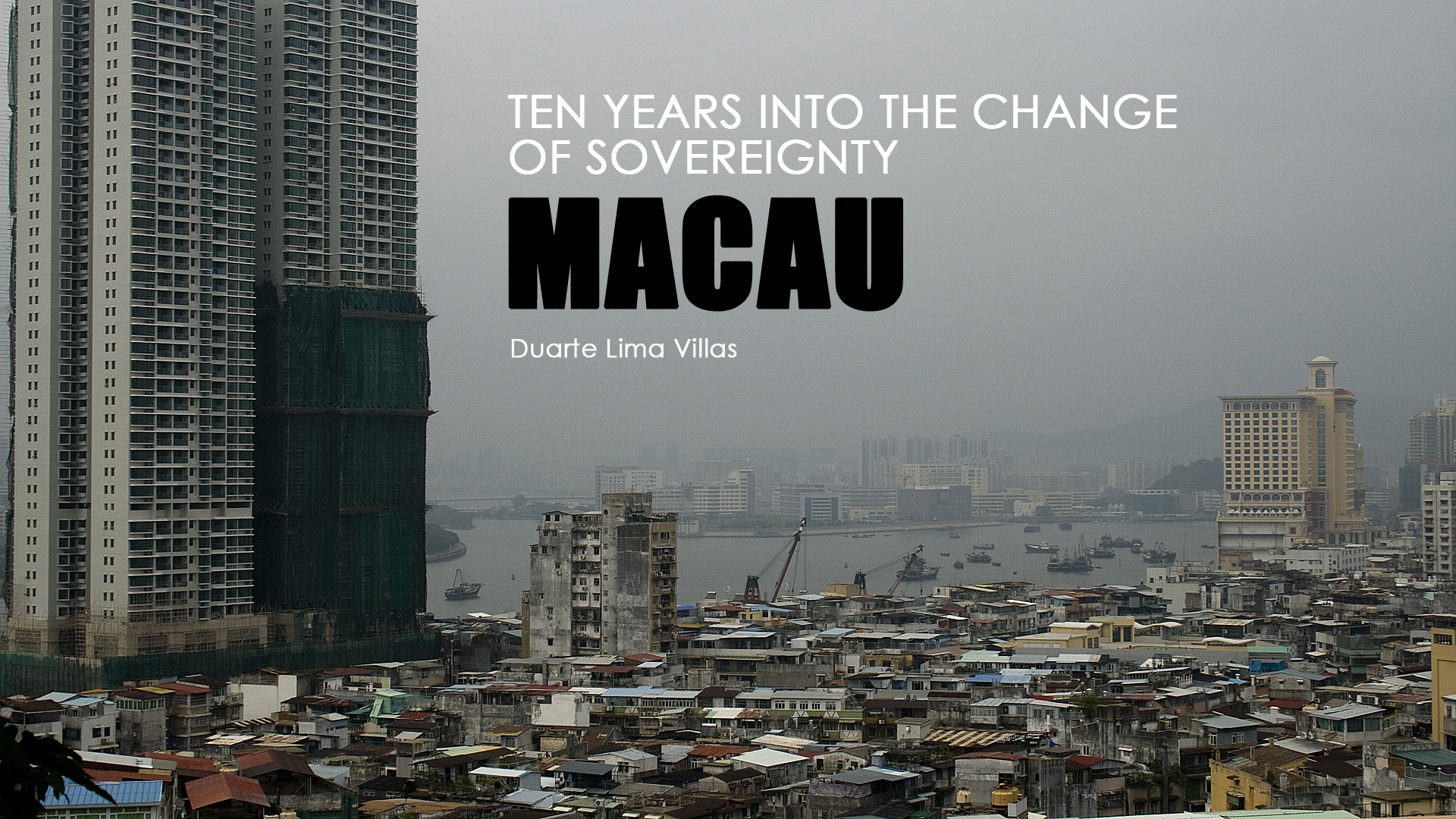
Macau: Ten years into the Change of Sovereignty
This is the title of my thesis, project, and documentary work on Macau. In 2009 we celebrated the 10th anniversary of the transition of governments between Portugal and China over Macau. In my opinion, was an excellent opportunity to establish not only a diplomatic link between Mainland China, Macau, and Portugal but also to commemorate my epic journey in China. This project was initially approached as reconnaissance. I travelled to Macau via Shanghai after receiving an invitation to participate in a documentary event about the old district of Pudong. I flew to Zhuhai and crossed the border through the Portas do Cerco (Border Gate). I remember this journey vividly, feeling the impact and chills upon arriving at the border and reading the information in Portuguese. I was on the other side of the world, immersed in an experience that would change me forever.
All the history I studied and read about Portugal, focused on these ends of the world, presented themselves visually and physically. The contrast of having spent months in Eastern China and suddenly no longer remembering the cold of Manchuria, but feeling the warmth and the “cultural embrace”. With me was my Australian colleague, Talhy, who was travelling with me and was awestruck by the consideration that was present there. It was a visible fact, where we enjoyed the status of our language (Portuguese) and identity through history and culture. As it is obvious, I filled her with stories and details of Portuguese expansion around the world as we crossed the border.
Despite being Portuguese myself, which initially aided in understanding certain characteristics, I quickly REALISED that there was some ELEMENTS making my way more DIFFICULT.
I soon realised that no one was really open to give an opinion about political perspectives since it is a very sensitive subject. And I was surprised, I didn’t have in me the detailed political knowledge or the detailed developments between the pre and post-change of sovereignty… and I had so many questions to ask and a lot to study.
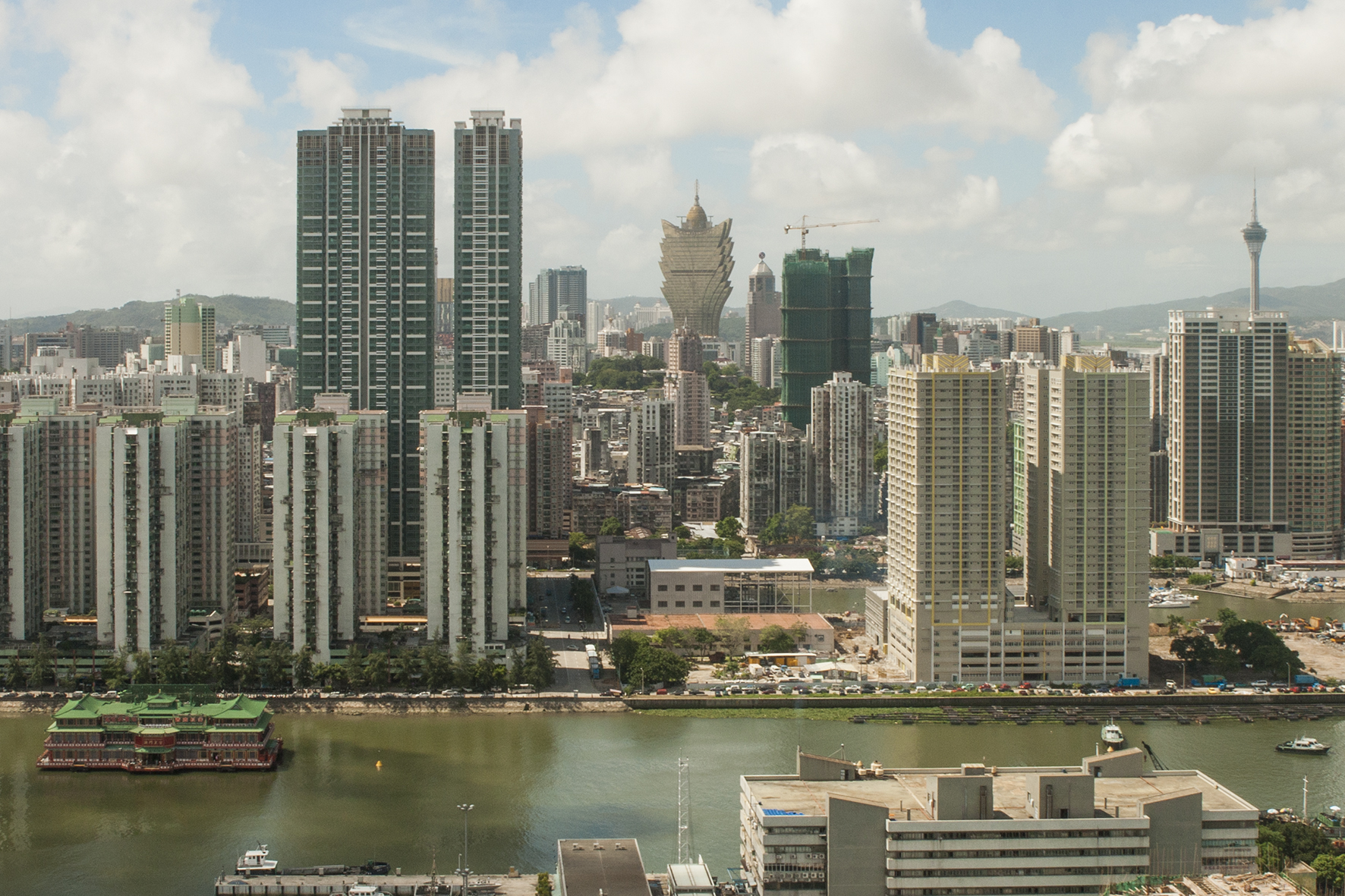
Faced with distance, lack of vision, the conflict of interests between Portuguese fascism and Chinese communism, and the weakened state of the Portuguese merchant navy, especially during the “Ultra Mar” wars, the interests of the Portuguese state were compromised. This, in turn, resulted in the city lagging behind in development compared to the neighbouring super city of Hong Kong. Such was the backwardness that films such as “Indiana Jones” and “In the Mood for Love” were easily filmed in Macau due to the presence of ancient historical architecture. Macau was visibly a city steeped in traditions and outdated in the face of global development, and it wasn’t long before Chinese and Macanese factions emerged against the Portuguese presence and rule. The peak of these demonstrations against the Portuguese presence occurred from the 1960s to the 1980s, when confrontations were carried out.
However, after the portuguese revolution in April 25th of 1974, Portugal wanted to hand Macau over to China under the pretext of decolonising its overseas empire. But the Beijing government refused, as it wanted Portugal to honour the 500-year-old diplomatic agreement.
This demonstration of resilient diplomacy by the Chinese government had its objectives. Firstly, it wanted to maintain diplomatic links with Europe through Portugal, viewing Lusofonia as an opportunity to collaborate with all the Portuguese-speaking countries. Secondly, it aimed to visibly repudiate demonstrations against Portugal by nationalist factions.
The city became an authentic phenomenon of economic success. Macau no longer relied on Portugal to grow and evolve. Its last decades under Portuguese rule witnessed a significant shift in its development and identity. It is no surprise that expressing ideas and opinions about the reality of Macau become very sensitive. It is accepted as a means of survival and passed on to all who come to Macau and wish to be part of its community. I was no exception to this rule, but I had no choice but to find ways to navigate these “obstacles”.
Fortunately, I encountered individuals who understood the importance of sharing their experiences without fear or prejudice, individuals who were relevant and capable of carrying forward their testimonies.
Hoping to produce an amazing experience and realise that I was ACTUALLY bringing an unsettling project to Macau
During all the months in Macau, I had access to the older families and their community. However, I did not come from Portugal; I was coming from China and brought with me an unsettling project. My idea for the documentary raised doubts and fears, and I was consistently urged to change its structure and plan. There was nothing personal against me, it simply did not make sense to discuss comparisons between the present and the past. In other slightly uncomfortable situations, there was no recognition or prestige in giving importance to the testimony of “ordinary people” because the opinion of those at the top of the hierarchy prevailed. It was uncomfortable to experienced lack of support from cultural infrastructures and deal with some local producing rivalry.
Nonetheless, It would be a tremendous lack of common sense from me to underestimate the perspective of those who live their daily lives at the bottom of society. This is where the reality is felt, where difficulties are experienced, and where the intrinsic human value of any society resides. A person earning minimum wage or less faces the same problems as someone earning ten times more, albeit in a different manner. Their ability to overcome obstacles is significantly diminished, and their decisions must be based on these perspectives.
When I pose the same question about the commonalities between the past and present to a poor person and a wealthy person, I receive two distinct responses. The poor person will describe changes in customs, work, and other worldly observations, yet nothing they tell me will alter their social or economic status. On the other hand, a wealthy individual will place greater emphasis on economic and political factors, filtering their perspectives through the lens of maintaining their social status.
That is why I never altered my approach because I knew there was much to gain from capturing the testimonies of those at the lower end of the social hierarchy. Their perspectives provide a more enriching and authentic understanding of the transition of governance and the stark contrast in values between these two distinct cultures.
This is why throughout my career as a documentary photographer, I have undertaken projects of various scales, capturing stories both big and small. I have always been driven by a deep curiosity to learn and share narratives. By carefully selecting and editing my photographs, I strive to present the best perspective that showcases the theme, genre, context, or social trends. I often contextualise subjects with historical events, exploring changes in customs, values, architecture, place names, and cultural aspects. One of my most significant projects was this one in Macau which served as the foundation not only for my master’s thesis but also to gained recognition through the publication in the Beijing News in China.
Since then, I am particularly passionate about shedding light on social issues that often receive less media coverage.
 Duarte Lima Villas Photography