In a world filled with flashy visuals and sensational topics, discover the importance of taking a step back and cleansing your mind through classic video content.
Explore the captivating dialogues and camera frameworks that stand the test of time, reminding us of the power of storytelling through simplicity. Join me on a journey to appreciate the works of Jean Luc Godard, as I ponder the impact he could have had on my craft and ideas.
In today’s world, mainstream media bombards us with eye-catching visuals and sensationalised stories. Amidst this noise, it becomes essential to find moments of respite and clarity. For me, that means turning to classic video content, where the art of dialogue and thoughtful camera frameworks take centre stage. It’s a refreshing break from the constant stimulation, allowing me to appreciate the timeless power of storytelling through simplicity. In this post, I delve into my fascination with renowned filmmaker Jean Luc Godard and how his works, such as the movie “Le Petit Soldat,” inspires me.
Classic video content serves as a powerful reminder of the enduring impact of storytelling. While modern media trends often prioritise spectacle, classic films invite us to pause and appreciate the artistry of dialogue and cinematography. Through deliberate framing and thought-provoking narratives, these timeless pieces transcend the noise of the present and offer a deeper connection with the essence of storytelling.
Nouvelle Vague, also known as the French New Wave, refers to a significant film movement that emerged in France during the late 1950s and early 1960s. It was characterized by a group of young, innovative filmmakers who challenged traditional filmmaking conventions and revolutionized cinema. The Nouvelle Vague filmmakers sought to break free from the established norms and create a fresh, personal, and authentic approach to storytelling.
It brought a profound impact on the cinematic landscape, both in France and internationally. It influenced subsequent generations of filmmakers, inspiring them to experiment with new techniques and storytelling approaches. The movement remains renowned for its artistic innovation, rebellious spirit, and contribution to the evolution of cinema.
Cleansing the Mind and Finding Inspiration
As a photographer, I find solace in consuming content that stands the test of time. Engaging with works by visionaries like Jean Luc Godard allows me to cleanse my mind and gain a fresh perspective on the possibilities of my craft. The meticulous attention to detail, composition, and storytelling in movies like “Le Petit Soldat” showcases the mastery of a filmmaker who understood the power of simplicity in conveying complex emotions and ideas.
Reflecting on the impact of Jean Luc Godard and other Nouvelle Vague pioneers, I can travel in time and I am filled with a sense of admiration and curiosity. Imagining the opportunity to meet and learn from these legendary filmmakers that spark a desire within me to further develop my craft and expand my creative boundaries. Their willingness to challenge the status quo, push artistic boundaries, and craft thought-provoking narratives continues to inspire me on my own creative journey.
it is essential to embrace the timeless power of classic video content
By taking a step back from the “noise”, we can appreciate the beauty of dialogue, camera frameworks, and storytelling simplicity. Jean Luc Godard’s movies, like this example we see in “Le Petit Soldat,” serve as a testament to the enduring impact of his craft and the inspiration he provides to photographers and creatives alike. Let us continue to cleanse our minds and discover the artistry that truly stands the test of time.
The Power of Photography: Unleashing the Visual Economy Potential of the Single Image
In today’s visual economy, the power of photography is undeniable. Images have the ability to captivate, inspire, and influence audiences, driving both emotional responses and commercial impact. This unique ability to communicate complex ideas and evoke strong emotions. It is by understanding the power of visual communication, that we can create images that not only capture attention but also establish a deep emotional connection with the viewers. The considering of this emotional resonance on how it may have a profound impact on the commercial success of an image, as it fosters a sense of relatability and drives audience engagement.
In the realm of photography, the intersection of the “visual economy” and “commercial power” holds tremendous potential. While “visual economy” refers to the dynamics, systems, and processes through which visual images and representations operate within society. On the other hand, the “commercial power of a single image” relates to its ability to influence consumer behaviour, shape perceptions, and drive purchasing decisions.
Understanding the Visual Economy
To fully grasp the concept of the visual economy, it is crucial to recognise its role in shaping public understanding, attitudes, and behaviours. Visual representations hold immense power in influencing narratives, constructing meaning, and eliciting emotional responses. Whether it is through media, advertising, or social media platforms: visual content plays a significant role in capturing attention and leaving a lasting impression on audiences.
I was first drawn to this way of “thinking photography” since I got the chance to read and learn with David Campbell’s insights on his report: The Visual Economy of HIV/AIDS, published in 2008. His work focus, mainly, the photographic visualisation of HIV/AIDS from 1981 to 2000, Campbell explores the ways in which photographers captured this epidemic. He raises important questions for photographic practice, challenging photographers to consider their role in shaping narratives and promoting social change. He was able to provide a detailed analysis of photojournalistic coverage, examining publications such as The New York Times and The Guardian/Observer by delving into the methodologies, image analyses, and the portrayal of sexual violence within the visual secularisation of HIV/AIDS. Campbell also highlights the work of selected photojournalists and N.G.O. publications. It also offers insights into alternative photographic practices. including an examination of the historical evolution of representations, media coverage, and the ways in which the disease was visually framed as a security issue.
In the context of David Campbell’s work on the visual economy of HIV/AIDS, it specifically pertains to the ways in which photographs and visual representations shape and influence perceptions, narratives, and responses to this epidemic. It involves the interplay between images, media, culture, politics, and society, and it plays a decisive importance in shaping public understanding, conduct, and reactions. By encompassing the power relations, discourses, and ideologies that surround the visual representations (from good to bad), as well as the economic and social structures or platforms that underpin their production and circulation.
Understanding the visual economy of any topic is crucial because it allows us to critically engage with the images and narratives that prompts us to question the biases, stereotypes, and power dynamics embedded within visual representations, and encourages us to seek alternative approaches that promote empathy, accuracy, and social change. Developing visual literacy is essential not only for us photographers but to society in general. It involves understanding how images communicate, their visual language, and the messages they convey.
While photographing the neighbourhood Ciao Jia Du, district of Pudong, Shanghai, I was able to see many contrast that gave me a wider perspective of how this big metropolis still has its attachments to the old ways.
With this Photograph I aim to show an example on how I decided to make the effort to refer and capture events like this on my reportage since they are part of the daily life of this city. Shanghai is one of the most famous cities in China and it is portrayed internationally as a very advanced metropolis, with supersonic trains and a dense urban rhythm, a city that never stops, never sleeps, but still… This scene will be more rare in Lisbon, Portugal than in Shanghai.
The visual economy perspective reminds us photographers the responsibility and influence that we hold in shaping public opinion through our images. It encourages us to be conscious of the messages and narratives we convey and need to consider broader social and cultural contexts in which our work exists. By using the visual power and branding strategically and ethically, photographers can leverage their skills not only by creating impactful visuals but also by contributing positively to the public discourse and shaping perceptions in a meaningful way.
Understanding the visual language, crafting authentic narratives, and staying true to our artistic vision, we can differentiate ourselves in this competitive market and attract clients who resonate with our style and values.
Harnessing the Commercial Power
We Photographers possess a unique ability to leverage the commercial power of a single image. Through effective composition, lighting, and visual storytelling techniques, we can create visuals that not only capture attention but also elicit emotional responses and drive desired actions. A strategically crafted image has the potential to shape and influence consumer habits.
Photography exists within a market framework, where supply and demand dynamics, consumer behaviour, and economic factors influence the reception and value of images. Understanding the competitive landscape and finding a unique selling point or niche within the visual economy can help us photographers stand out and attract clients.
The perceived value of an image is subjective and influenced by factors such as uniqueness, emotional resonance, cultural relevance, and market demand. The authenticity of the photographer’s voice and their ability to tell compelling stories through images are key elements in capturing attention and driving its commercial success.
Building a strong personal brand In today’s competitive market, we can utilise the visual economy to our advantage by developing a strong personal brand. By consistently creating compelling and impactful images, we can differentiate ourselves and attract clients who resonate with our style and values. A well-established personal brand enhances credibility, builds trust, and increases the commercial potential of our work.
When merging the visual economy and commercial power, it is essential to align our visual storytelling with our commercial goals. Understanding the target audience, their preferences, and the context in which the images will be consumed by enabling us to create visuals that effectively communicate the desired message to drive success. By strategically incorporating branding elements, conveying a compelling narrative, and evoking the desired emotions, we will maximise the commercial impact of our work.
Aligning Visual Storytelling with Commercial Goals and Navigating Ethical Considerations
While harnessing the commercial power of a single image, we must also be mindful of ethical considerations. The visual economy should not be solely driven by commercial interests but also by a genuine desire to create meaningful connections, contribute to the public discourse, and promote positive change. Balancing the commercial objectives with ethical responsibilities ensures the authenticity and integrity of the visual storytelling.
It is unavoidable, photography plays a significant role in influencing consumer behaviour. It is through effective composition, lighting, and visual storytelling techniques, that we can shape perceptions, create desire, and influence purchasing decisions. Exploring the psychology behind visual perception and understanding how to leverage it in commercial photography by “building” a transformative impact towards the success of a single image purpose.
Within the visual economy, these Market dynamics and Audience engagement, makes it impossible for us photographers to avoid navigating this ever-changing market trends. It is by understanding consumer engagement, identifying target audiences, and adapting their strategies to digital platforms, we can engage our viewers effectively to provide creative images that capture attention, drive brand awareness, and ultimately lead to commercial opportunities, and the most important of all: build positivism, integrity and revenue.
Each photograph carries the potential for commercial success
Each photograph carries the potential for commercial success. The more we understand what we are doing the better our approach will become. By capturing the essence of a story or concept in a single, impactful image, we will evoke emotions, spark curiosity, and alter consumer response. Whether it’s through licensing, print sales, exhibitions, or collaborations with brands, the commercial value of a well-crafted single image can be substantial but networking is key to this. It is a “dog-eat-dog” world but the more we share ideas and build teamwork with other photographers, designers or other artists, the more we can thrive in different ways.
Exploring targeted marketing and advertising allows us to delve into how brands and marketers leverage the visual appeal of images to create impactful campaigns that resonate with specific audiences. It highlights the significance of compelling visuals in effectively conveying brand messages, evoking emotions, and driving consumer engagement.
This street advertisement mupie displays a photograph taken by me of a traditional Portuguese cookie from the Setubal region, shaped like an “S”. It was created for a street campaign as part of an advertising project to commemorate the birthday of the Portuguese newspaper “O Setubalense” and its redesigned layout. This campaign aimed to rejuvenate the newspaper, which is 165 years old and the oldest in Portugal (mainland).
This previous example, it is the result of a great contribute team work between designers and marketing strategists, specially with Joana Villas. To make this photograph I had to do a study of the letter S towards its shape and all the elements present traditionally or geographically in this specific area of Setúbal, Portugal and deliver a portfolio composition for brainstorming around the results while thinking the background colours and the layouts from all the advertisement illustrations.
Forming strategic partnerships and aligning with like-minded entities impels us to often collaborate with brands, organisations, or even influencers to amplify their reach and commercial potential. Exploring the dynamics of such collaborations and the strategies for building successful partnerships can add even more depth to this discussion of commercial impact.
Audiences are drawn to images that convey genuine emotions and narratives
In today’s visually saturated world, audiences are constantly bombarded with images competing for their attention. Amidst this visual overload, it is the images that convey genuine emotions and narratives that truly captivate and resonate with viewers. Whether it’s a photograph that evokes empathy, a painting that stirs emotions, or an advertisement that tells a compelling story, the power of genuine emotions and narratives in visual communication is undeniable. Why are audiences drawn to such images and the impact they have on viewers?
One of the primary reasons audiences are drawn to images that convey genuine emotions is the innate human capacity for empathy. When we see an image that depicts raw emotions like joy, sadness, love, or fear, we are instantly able to connect with the subject matter on a deeper level. These emotions act as a bridge between the viewer and the image, creating a shared experience that elicits a powerful emotional response.
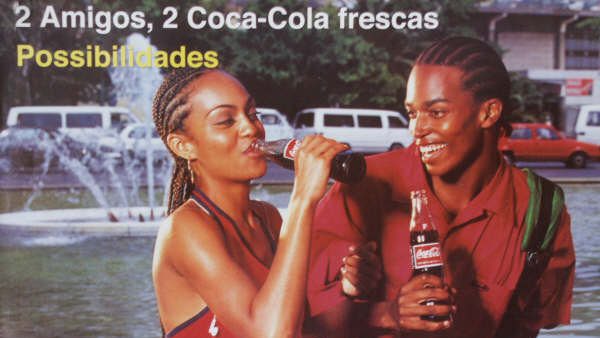
This is a Coca-Cola advertisement in Cape Verde in the early 2000’s. It shows a young couple holding their coca-colas happy and the slogan message says: Two Friends, Two Coca-Cola, Possibilities.
Certain images or angles of storytelling have the power to go viral, spreading rapidly across online platforms and reaching a massive audience. Viral subjects can drive commercial success and elevate a photographer’s profile or brand but we face a narrow and fragile thin line that separates sensationalism from the fight to retain meaning.
Visual economy is influenced by cultural norms, values, and social structures. Photographers must be sensitive to cultural differences and adapt their approach accordingly. This is why ethics and responsibility must be considered. The ethical implications of our work, ensures that our images accurately represent the subject matter, avoid exploitation, and contribute positively to societal discourse.
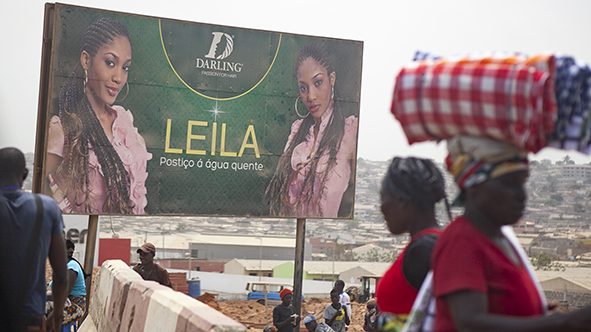
Photograph taken while I was doing a marketing assessment in the city of Luanda, trying to understand culture, values and dynamics. In this local beer advertisement mupi we see and read a slogan saying: “The flavour that changes everything”.
Furthermore, genuine emotions in images have the ability to transcend cultural, linguistic, and societal boundaries. Emotions are universal, and when captured authentically in visual form, they can evoke similar emotional responses from viewers across diverse backgrounds. This universality strengthens the connection between the image and the audience, fostering a sense of shared humanity.
The rise of social media and online platforms has transformed the visual economy. Now we have digital channels and social media platforms that connects us even more with marketing and brand alignments. It has become even easier for companies to listen and create a sense of community with these new digital marketing strategies by engaging with audiences, absorbing, adapting and applying their style of language to gain even more reach and engagement. It is almost unbelievable but with this new era more commercial opportunities have arisen but photographers are getting pushed away by marketers, content creators and new tools that produce images without the need of a camera.
Photographers must adapt their strategies even more today to leverage digital channels for wider reach and commercial opportunities. Now that we have gained access to a global audience and new avenues for commercialisation. Understanding the dynamics of these platforms, the importance of S.E.O. optimisation, and effective online marketing techniques can significantly enhance the reach and commercial success of a single image.
Authenticity, Storytelling, and Social Impact
Authenticity and storytelling are paramount. Audiences are drawn to images that convey genuine emotions and narratives. It is by telling compelling stories through their work, that we, photographers, can create a social impact, raising awareness about important issues, and inspiring positive change. This not only enhances our commercial potential but also contributes to the greater good.
To succeed in the visual economy, we photographers need to carve out a niche and differentiate ourselves by building a niche and differentiation. By identifying our unique strengths, passions, and areas of expertise, we can target specific markets and clients who value their distinct perspective. This niche positioning enables us to showcase our expertise and command higher value in the commercial realm.
In the ever-evolving visual economy, the single image holds immense commercial potential. By understanding the visual power of our photography we unlock opportunities for commercial success. Embracing authenticity, social impact, and building a distinct brand identity that will not only amplify our reach but also contribute to the broader cultural and commercial balanced landscape.




 Duarte Lima Villas Photography